
For many people, yes, though insoles help with comfort, not with the shape of your feet. Arch supports can ease aching arches, heels and ankles while you wear them, and Mayo Clinic says they “often reduce symptoms.” They don’t rebuild an arch. The NHS says insoles “will not change the shape of your feet,” and APMA says over-the-counter inserts can’t correct biomechanical problems or cure long-standing foot issues.
The research is more cautious than the marketing. Reviews of foot orthoses in adults with flexible flat feet find the evidence limited and mixed. One 2023 meta-analysis concluded insoles “might be useful in decreasing pain in adults.” Cleveland Clinic adds that inserts don’t appear to cause harm. That makes a good insole a sensible, low-risk thing to try.
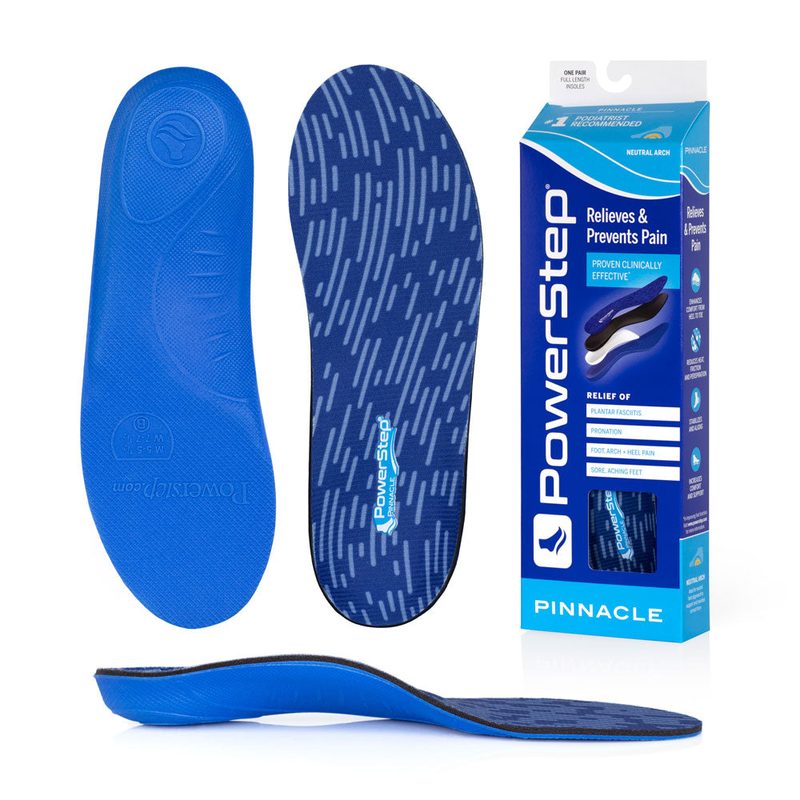
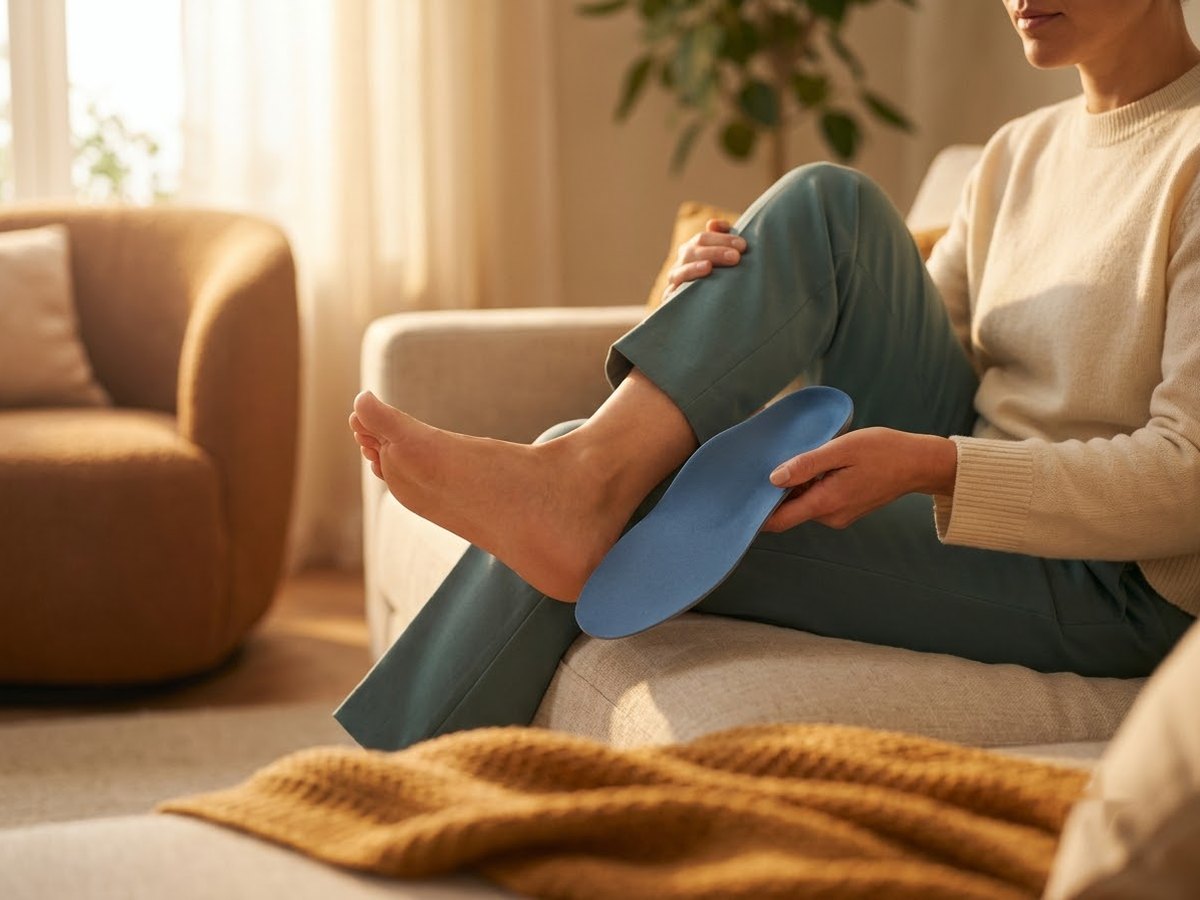
What an insole can and cannot do for flat feet
Flat feet (pes planus) means the arch on the inside of the foot is low or touches the floor when you stand. The NHS calls flat feet common and “usually nothing to worry about,” and Mayo Clinic notes that most people with flat feet have no symptoms at all. If your feet don’t hurt, you don’t need an insole.
When flat feet do ache, the discomfort usually shows up along the arch, the inside of the ankle or the heel, and it tends to build with activity. An arch-support insole fills the gap between your arch and the shoe and spreads pressure more evenly.
What the main medical sources say
- Mayo Clinic: arch supports “will not cure flatfeet, but they often reduce symptoms and improve foot and ankle alignment.”
- NHS: insoles, supportive shoes and exercises won’t change the shape of your feet but can ease pain or stiffness.
- APMA: over-the-counter inserts can cushion the feet, provide comfort and support the arches.
- Cleveland Clinic: orthotics manage symptoms rather than treat the condition, and symptoms may return if you stop wearing them.
So the honest promise is narrow. An insole supports your foot while it is in the shoe. Take it out and your feet are the same as before.
What the research actually found
Controlled studies are fewer and smaller than you might expect for such a common problem. Here is what the main reviews concluded.
| Study | What it looked at | What it found |
|---|---|---|
| Oerlemans et al., 2023 | 9 studies, children and adults with flexible flatfoot | Bigger pain reduction with orthoses than controls in adults, but studies too varied to call them proven; “might be useful in decreasing pain in adults” |
| Herchenröder et al., 2021 | 12 studies in adults with flatfoot | Mostly low-quality studies; “a lack of evidence” on the effect of foot orthoses |
| Banwell et al., 2014 | Adult flexible flatfoot | Good-to-moderate evidence of better standing balance and lower energy cost when walking; low-level evidence for pain |
| Jafarnezhadgero et al., 2024 | 24 studies on walking mechanics | Orthoses measurably changed how flat feet move, including how far the heel rolls inward |
Put together, insoles change how a flat foot moves and many adults report less pain, but the trials are too small and varied to prove it for everyone. That gap is why Mayo Clinic’s practical advice (“often reduce symptoms”) sounds more upbeat than the systematic reviews. Clinicians commonly recommend arch supports and many people report relief, but trials haven’t yet confirmed it to a high standard.
Children are different. In a landmark 1989 trial of 129 children with flexible flat feet, three years of corrective shoes or inserts made no difference to how the arch developed, and painless flat feet in children usually need no treatment at all.
Who is most likely to notice a difference
Based on what the sources describe, these are the situations where an arch support has the best chance of helping:
- Your flat feet are flexible. The arch shows when you sit or rise onto your toes and flattens when you stand. This is the most common type, according to Cleveland Clinic.
- Your feet ache after long days, especially standing or walking on hard floors. Pain that builds with activity is the classic pattern Mayo Clinic describes.
- The inside edge of your shoes wears out first. Cleveland Clinic says uneven wear on the inside of the sole is often the first clue to overpronation.
- You also get heel pain in the morning. Mayo Clinic lists flat feet among risk factors for plantar fasciitis, and arch supports are commonly used for heel pain.
For very flat arches · Premium price range
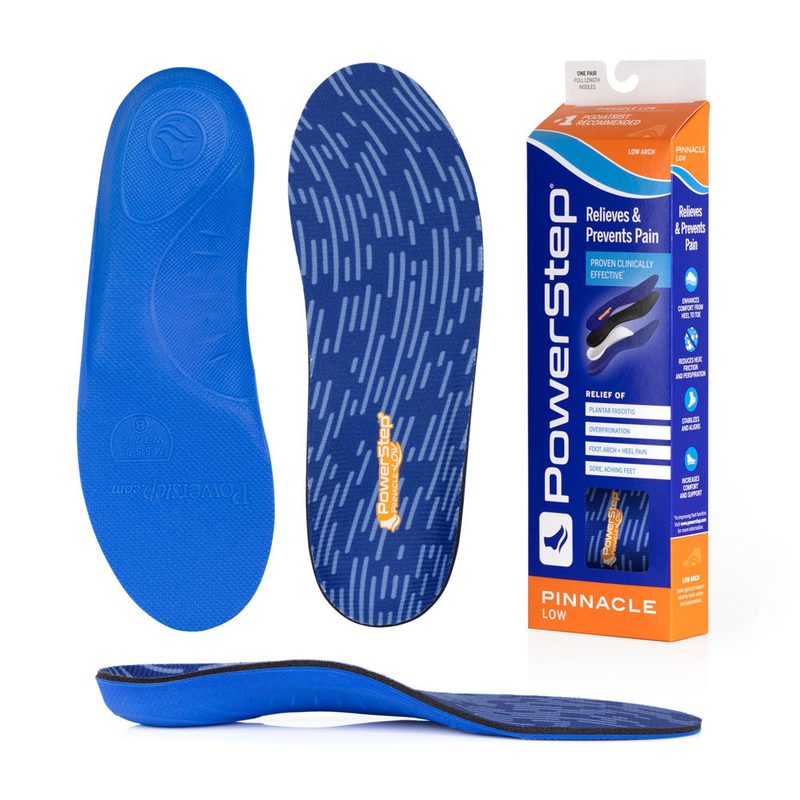
PowerStep Pinnacle Low
Same semi-rigid shell and deep heel cradle as the Pinnacle with a lower, contoured arch. PowerStep designs it for flat feet, so it suits feet that find a standard arch presses too much.
See price & details ›An over-the-counter insole is less likely to be enough, and a professional assessment makes more sense, if your arch stays flat even on tiptoe (a rigid flat foot), if only one foot has flattened, or if you have diabetes or circulation problems. APMA says people with diabetes or poor circulation should see a podiatrist rather than self-treat with retail inserts.
See a doctor or podiatrist if foot pain is persistent or getting worse, if only one foot is affected, if your arches have flattened recently, or if you notice swelling and pain just behind and below the inside ankle bone. The NHS and AAOS list these as reasons not to rely on insoles alone.
What to look for in an insole for flat feet
Cleveland Clinic’s advice for buying an off-the-shelf insert is to pick one “with a firm arch that doesn’t easily give.” Soft gel or foam cushions add comfort but little structure, though Superfeet notes some people with flat feet find its more flexible, cushioned shapes feel best. In practice that means:
- A firm or semi-rigid shell under the arch, usually plastic such as polypropylene, rather than foam alone.
- An arch height that matches your foot. A very flat foot often does better with a low or moderate arch than a tall one, which can press uncomfortably. Superfeet, for example, steers flat-footed buyers to its Low Arch model.
- A defined heel cup that holds the heel. Superfeet’s sizing advice is that the heel should sit “in” the cup, not on it.
- The right length and volume for your shoe. Full-length insoles replace the shoe’s own insole; 3/4 versions sit on top in tighter shoes.
Firmness is a trade-off, not a virtue in itself. A 2026 review of footwear for workers who stand all day cautioned that “semirigid arch supports can cause discomfort” for some people. If a firm insole still hurts after a sensible break-in, a softer or lower-arch model may suit you better.
Honest note
Insoles aren’t a test you can pass or fail in one afternoon. Most brands expect a one-to-two-week break-in, and some people never get on with a firm arch. Buy from a seller whose return window you understand, and don’t assume that pressure points will fade on their own. APMA specifically warns against that assumption.
How to give an insole a fair trial
Brands publish similar break-in schedules. PowerStep suggests up to one hour on day one, then one more hour each day; if you are comfortable after five hours on day five, you can wear them full time. Superfeet suggests 1–2 hours on day one and builds up over about two weeks. Cleveland Clinic says feet can take up to a month to adjust to orthotics.
- Take out the shoe’s original insole first if the new one is full length, or the shoe will be too tight.
- Wear the insoles in the shoes you use most, not a pair you rarely wear.
- Don’t assume pressure points will go away with continued wear; APMA specifically warns against that. Blisters, numbness or new pain elsewhere are reasons to stop and reconsider the shape.
- Give it about two weeks before judging, then decide whether the aching is better, the same or worse.
If a decent insole hasn’t helped after a few weeks of regular wear, that is useful information too. It is a good moment to see a podiatrist, who can check whether your flat feet are flexible or rigid and whether a different approach, such as stretching, strengthening or a prescription device, makes more sense.
Questions people ask
Can insoles fix flat feet permanently?
No. The NHS says insoles “will not change the shape of your feet,” and Mayo Clinic says arch supports won’t cure flat feet. They support the arch while you wear them, and Cleveland Clinic notes that symptoms may return if you stop.
Do I need insoles if my flat feet don’t hurt?
Usually not. Mayo Clinic says most people with flat feet have no symptoms and that painless flat feet don’t need treatment. Insoles are worth considering when your feet, ankles or heels ache, especially after long days on your feet.
Are firm or soft insoles better for flat feet?
Cleveland Clinic recommends an over-the-counter insert with a firm arch that doesn’t easily give. Firm shells resist collapsing under a flat foot. Some people find them uncomfortable, though, so the best choice is the firmest insole you can wear comfortably after break-in.
How long does it take for insoles to help?
Most brands describe a break-in of one to two weeks, building up wear time an hour or so a day, and Cleveland Clinic says it can take up to a month. Judge comfort after about two weeks of regular wear rather than on day one.
Can insoles make flat feet worse?
Cleveland Clinic says studies indicate that inserts don’t cause harm. A poorly matched insole can still be uncomfortable, for example an arch that is too tall. APMA advises not assuming that pressure will go away with continued wear.
Sources: Mayo Clinic: Flatfeet diagnosis and treatment · NHS: Flat feet · APMA: Orthotics and shoe inserts · Cleveland Clinic: Orthotics · Oerlemans et al., 2023 · Herchenröder et al., 2021
Updated October 2026. This article is general information, not medical advice. Insoles don’t cure flat feet; see a podiatrist or doctor for foot pain that persists or gets worse.