Best Insoles for Flat Feet · Standing All Day

Best Insoles for Standing All Day With Flat Feet

For standing all day with flat feet, pair a semi-rigid arch with extra cushioning on top: our top pick is the PowerStep Pinnacle Work. In a study of assembly workers on 8-hour shifts, insoles made standing on a hard floor more comfortable, about as much as an anti-fatigue mat. Canada’s workplace-safety agency advises a shock-absorbing cushioned insole for metal or concrete floors, plus shoes with arch support.

Checked October 2026 · general information, not medical advice

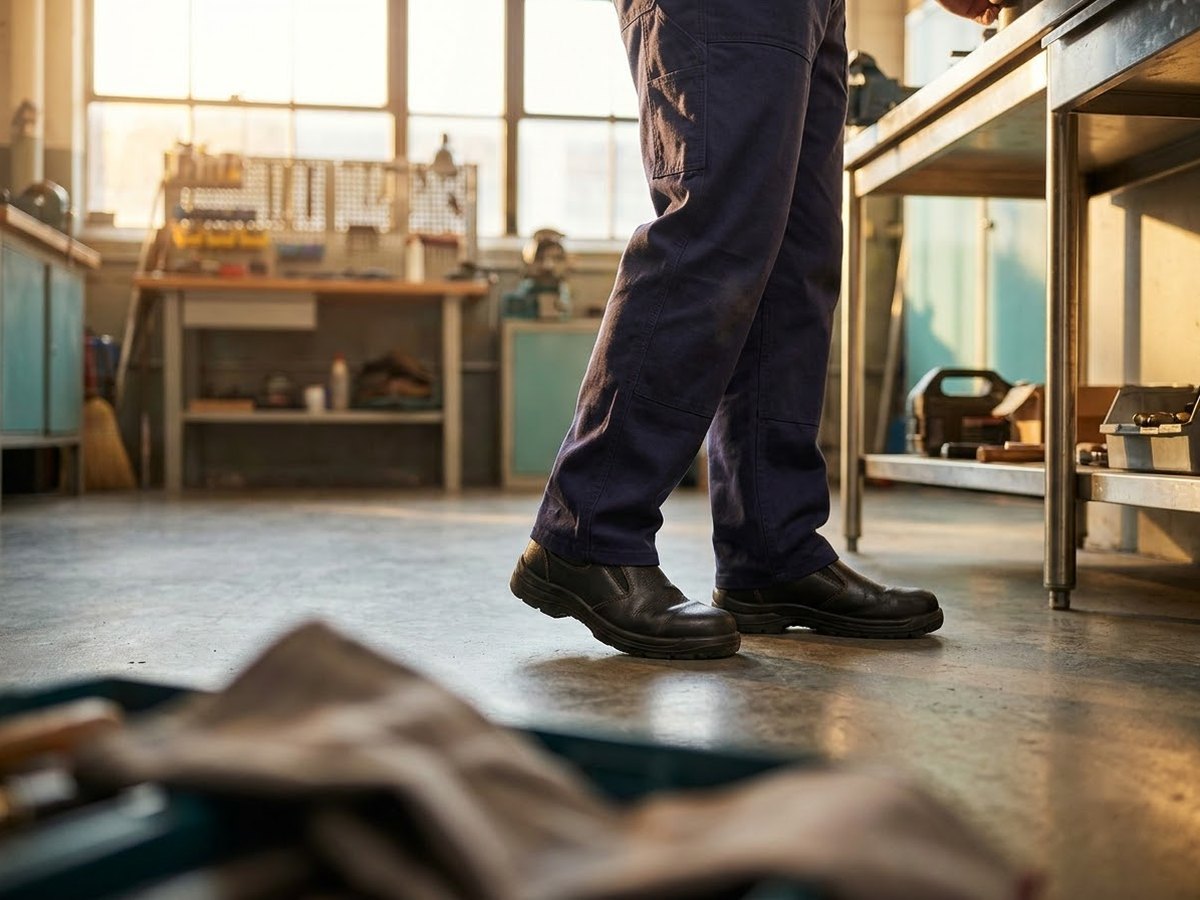
Worker in comfortable work shoes standing at a workbench on a polished concrete floor

Our top 3

Top picks at a glance

Best for standing all day#1
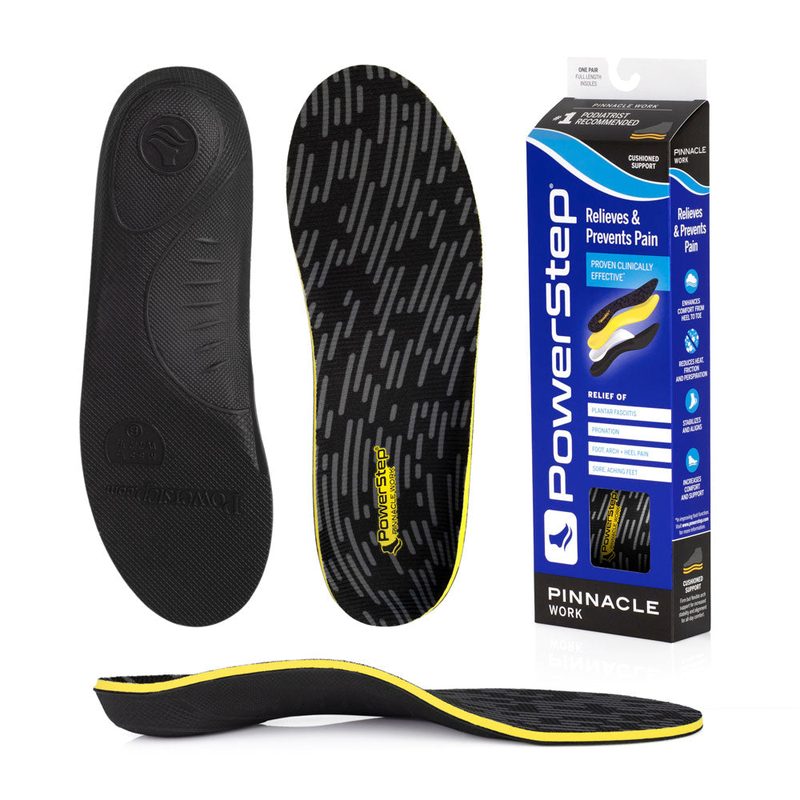
PowerStep Pinnacle Work insole

PowerStep Pinnacle Work

Premium price range

PowerStep’s semi-rigid shell under a thicker shock-absorbing foam layer, made for work shoes and boots.

Check current price ›
Best cushioned support#2
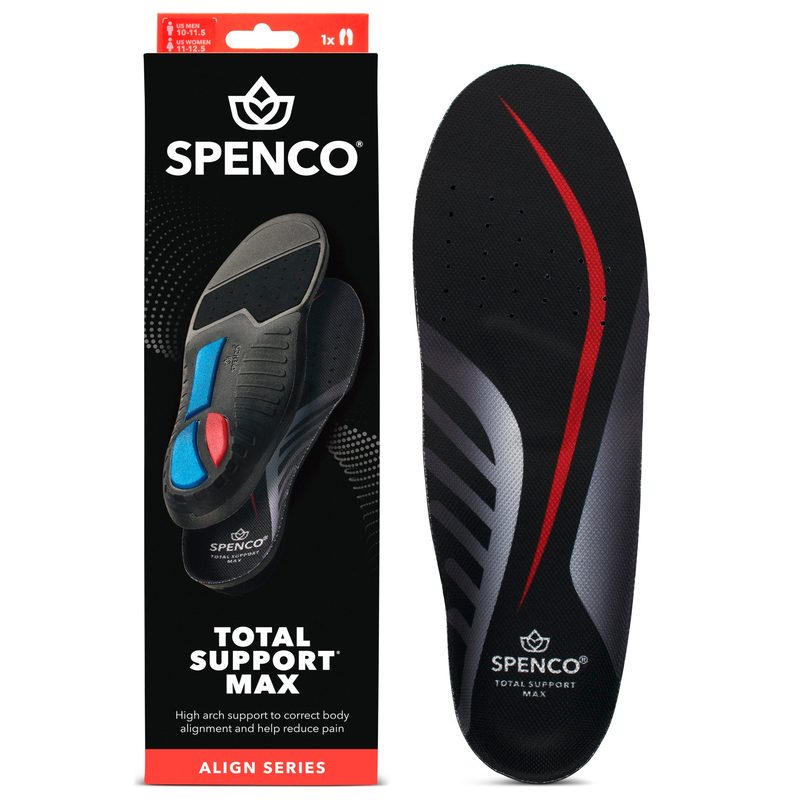
Spenco Total Support Max insole

Spenco Total Support Max

Premium price range

More cushioning plus a metatarsal pad over a firm base, if firm shells feel harsh. Note: Spenco rates the arch High.

Check current price ›
Best value for long shifts#3
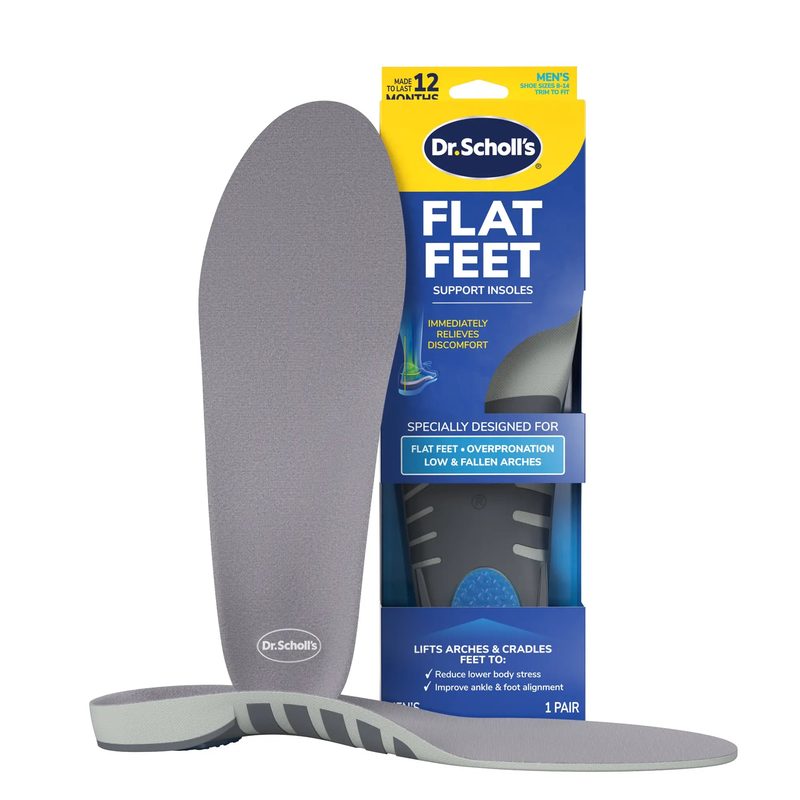
Dr. Scholl's Flat Feet Support Insoles insole

Dr. Scholl’s Flat Feet Support Insoles

Budget price range

A budget flat-feet insole with a stabilizing shell, handy for a second pair of work shoes.

Check current price ›

In detail

Who each one suits

Specifications are each brand’s own; fit notes draw on podiatry sources and independent reviews. We did not lab-test these insoles.

PowerStep Pinnacle Work insole
Premium price range
Best for standing all day#1

PowerStep Pinnacle Work

For long shifts on concrete, the Pinnacle Work puts PowerStep’s semi-rigid shell under a thicker shock-absorbing foam layer. PowerStep sells it for work shoes, work boots and standing all day.

Why it stands out

  • Same firm-but-flexible shell and deep heel cradle as the Pinnacle.
  • Thicker “ShockAbsorb” foam on top for hard floors.
  • Pre-sized, widths up to 2E, black top fabric that hides wear.
ArchModerate (neutral)
SupportSemi-rigid polypropylene shell
LengthFull length, pre-sized
CushioningThicker shock-absorbing foam
FitsWork shoes and boots with removable insoles

Good fit if

  • You stand or walk on hard floors for most of the day.
  • Your work shoes or boots have a removable insole and some room.

Skip it if

  • Your boots are already snug — this is a thicker, dual-layer insole.
  • You specifically want a low-arch shape — this uses PowerStep’s neutral arch.
Spenco Total Support Max insole
Premium price range
Best cushioned support#2

Spenco Total Support Max

Spenco’s Total Support Max adds more cushioning on top of a firm multi-density base, with a deep heel cup and a metatarsal pad. Spenco lists flat feet among its uses but rates the arch as High, so it suits people who want cushioning more than a low arch.

Why it stands out

  • Firm multi-density support with softer cushioning pods.
  • Deep heel cup and metatarsal (ball-of-foot) support.
  • Listed in the APMA Seal of Acceptance database; 1-year limited warranty from Spenco.
ArchHigh (brand rating)
SupportFirm multi-density with cushioning pods
LengthFull length, sized
CushioningCushioning pods + forefoot pad
FitsWork, walking and sport shoes and boots

Good fit if

  • You stand on hard floors and firm shells have felt too harsh.
  • You also get pressure under the ball of the foot.

Skip it if

  • Your arches are very flat — Spenco rates this model’s arch as High.
  • Your shoes are shallow — it is one of the thicker options.
Dr. Scholl's Flat Feet Support Insoles insole
Budget price range
Best value for long shifts#3

Dr. Scholl’s Flat Feet Support Insoles

At a drugstore price, this is one of the few budget insoles built specifically for flat feet rather than general comfort. Dr. Scholl’s says it is designed for flat feet, low arches and overpronation, with a motion-control stabilizing shell. Older boxes call it “Stability Support.”

Why it stands out

  • Stabilizing shell and contoured arch rather than just gel.
  • Shock-absorbing heel cup.
  • Trim-to-fit in two size ranges.
ArchLow (flat feet, low arches)
SupportMotion-control stabilizing shell
LengthFull length, trim-to-fit
CushioningShock-absorbing heel cup
FitsEveryday shoes with removable insoles

Good fit if

  • You want to find out whether arch support helps before spending $50 or more.
  • You need a pair for each of several shoes.

Skip it if

  • You need the firmer control of a polypropylene orthotic like the Pinnacle Maxx.
  • Your arch stays flat even on tiptoe, or one foot has flattened recently — get a professional assessment first.
Timberland PRO Anti-Fatigue Footbed insole
Mid-range price range
Also worth a look

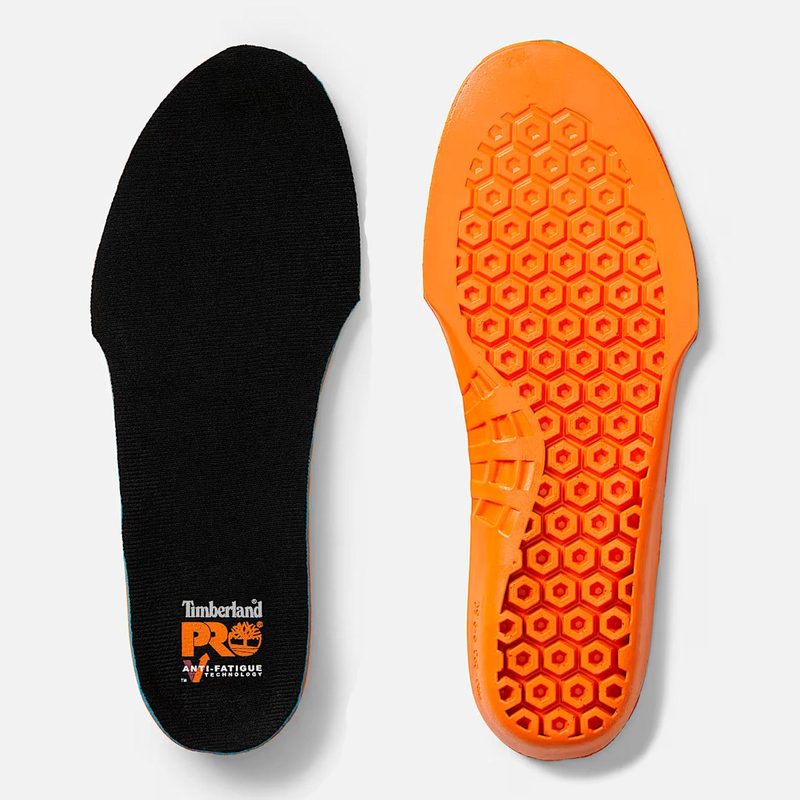
Timberland PRO Anti-Fatigue Footbed

Timberland PRO’s replacement footbed puts its Anti-Fatigue inverted-cone foam under an OrthoLite top layer. It is a cushioning footbed for work boots rather than a motion-control orthotic, so it suits flat feet that ache from long shifts more than arches that collapse.

Why it stands out

  • Inverted-cone Anti-Fatigue foam for shock absorption.
  • OrthoLite top layer with moisture management.
  • Sized XS–XXL and trimmable using your old footbed as a guide.
ArchAdaptive (not stated)
SupportMolded foam, no rigid shell
LengthFull length, sized and trimmable
CushioningAnti-fatigue cone foam + OrthoLite
FitsWork boots and work shoes

Good fit if

  • Your feet ache after long shifts in work boots.
  • You walk long routes at work more than you stand still.

Skip it if

  • Your arches collapse and your ankles roll in — add a firmer shell such as the Pinnacle Maxx.
  • Your boots are already snug.

On your feet for the whole shift?

Support plus cushioning beats either one alone. Start with an insole built for hard floors.

Check current price ›

Tips

Three things that make the difference

01

Rotate two pairs

Foam compresses over a long shift. Two pairs of insoles or work shoes give each pair time to recover between shifts.

02

Mind the thickness

Work insoles are thicker than factory liners. If your shoe feels tight, size up the shoe or choose a thinner insole, as CCOHS advises leaving room for arch supports.

03

Use the floor too

The same assembly-line study found anti-fatigue mats and insoles were about equally helpful. If you stand in one spot, a mat adds comfort on top of your insoles.

Honest note

Very firm arch supports are not right for everyone who stands all day: a 2026 review of standing workers noted that semi-rigid arch supports can cause discomfort. If firmness bothers you, choose a cushioned support insole and build up wear time slowly.

FAQ

Questions people ask

What insoles are best for standing on concrete all day?

Look for arch support plus shock-absorbing cushioning. The Canadian Centre for Occupational Health and Safety advises a shock-absorbing cushioned insole when working on metal or cement floors, and shoes with arch supports.

Do insoles help with standing all day?

In a study of assembly workers standing 8-hour days, insoles made standing on a hard floor more comfortable, and about as comfortable as using a floor mat. Evidence specific to flat feet is limited, but cushioning plus support is the usual approach.

Are soft or firm insoles better for standing?

Each has a trade-off. A 2026 review of standing workers found soft soles reduce impact and fatigue but give limited support, while harder soles add stability but can cause pressure discomfort. A firm arch under a cushioned top layer balances the two.

Can I use the same insole in work boots?

Usually, if the boot has a removable liner and room. CCOHS advises trying boots on with the supports you will wear, and checking with the manufacturer whether inserts affect the boot’s protection rating.

How often should I replace insoles I wear for work?

Sooner than for casual wear. PowerStep says its insoles last six months or longer with casual use and less with daily heavy use; Dr. Scholl’s designs most insoles to last about six months. Replace them when support or comfort drops.

Do standing jobs cause plantar fasciitis?

Mayo Clinic lists jobs with long hours of standing or walking on hard surfaces, such as factory and healthcare work, among the risk factors for plantar fasciitis. Supportive, cushioned footwear is part of reducing that load.

Support and cushioning, for every hour of the shift

Want the full picture? See all our best insoles for flat feet, compared by use, and the FAQ on fit, break-in and care.