

Best Insoles for Flat Feet · Kids

Best Insoles for Kids With Flat Feet

Most children with flat feet do not need insoles: flat feet are normal in young children, and most develop arches by about age 10. AAOS says painless flexible flat feet need no treatment. If your child’s feet or legs hurt, see a doctor first; if inserts are suggested, AAOS says over-the-counter supports usually work as well as custom ones. Our top pick for that case is the PowerStep Pinnacle Junior.

Checked October 2026 · general information, not medical advice

Child sitting on a school bench lacing up sneakers, seen from the side

Our top 3

Top picks at a glance

Best kids’ arch support#1
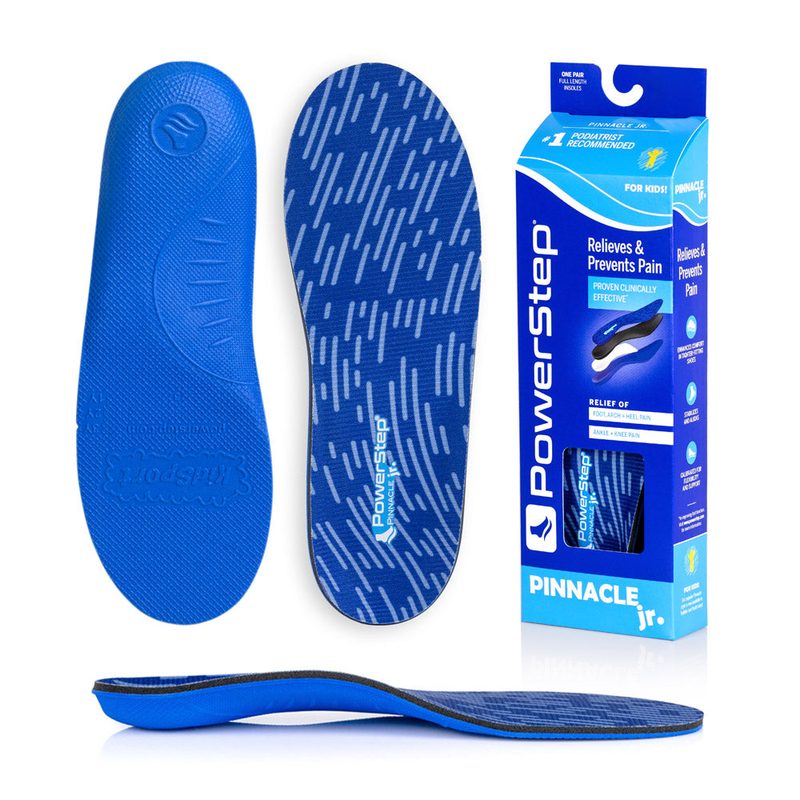
PowerStep Pinnacle Junior insole

PowerStep Pinnacle Junior

Premium price range

Child-sized Pinnacle: semi-rigid shell and deep heel cradle, toddler 11.5 to youth 6.

Check current price ›
Best 3/4 for kids#2
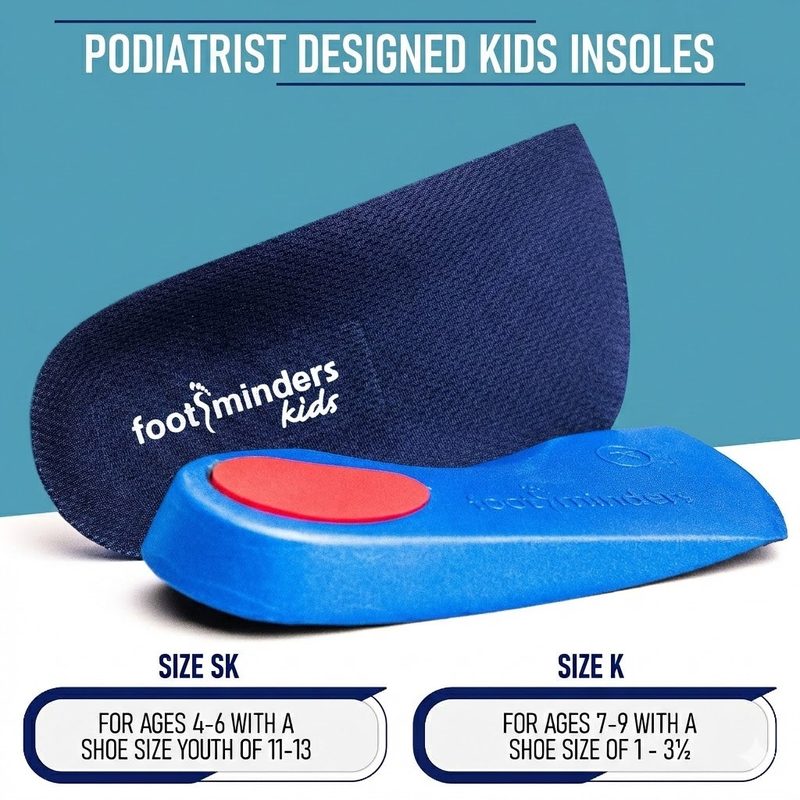
Footminders KIDS insole

Footminders KIDS

Mid-range price range

Podiatrist-designed 3/4 insert that leaves room for toes, two sizes for about ages 4–10.

Check current price ›
For teens in adult sizes#3
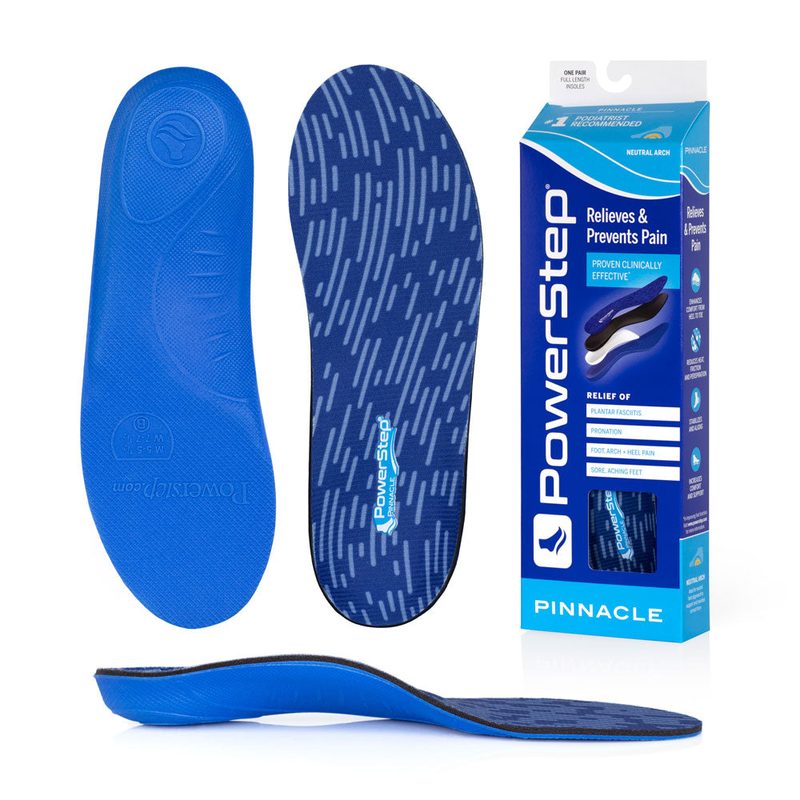
PowerStep Pinnacle insole

PowerStep Pinnacle

Premium price range

Once feet reach adult sizes, the standard Pinnacle is the usual next step.

Check current price ›

In detail

Who each one suits

Specifications are each brand’s own; fit notes draw on podiatry sources and independent reviews. We did not lab-test these insoles.

PowerStep Pinnacle Junior insole
Premium price range
Best kids’ arch support#1

PowerStep Pinnacle Junior

A child-sized Pinnacle: the same firm-but-flexible shell and deep heel cradle in toddler and youth sizes. It is for children whose flat feet hurt, ideally after a doctor has checked them, not for painless flat feet.

Why it stands out

  • Semi-rigid shell and deep heel cradle sized for children.
  • Pre-sized from toddler 11.5 to youth 6, so there is no trimming.
  • Fits sneakers and school shoes with removable insoles.
ArchModerate (neutral)
SupportSemi-rigid polypropylene shell
LengthFull length, kids sizes
CushioningFoam over EVA base
FitsKids’ sneakers and school shoes with removable insoles

Good fit if

  • Your child’s feet or legs ache with activity and a clinician has suggested arch support.
  • Their shoes have a removable insole.

Skip it if

  • Your child’s flat feet do not hurt — AAOS says painless flexible flat feet need no treatment.
  • Your child is growing fast and you would rather trim to size.
Footminders KIDS insole
Mid-range price range
Best 3/4 for kids#2

Footminders KIDS

A podiatrist-designed 3/4-length insole for children with flat feet or low arches, sold in two sizes by foot length. Being 3/4 length, it leaves room for toes in kids’ shoes that are not very deep.

Why it stands out

  • Firm-but-pliable pediatric arch support with a deep heel cup.
  • 3/4 length that does not crowd the toes.
  • Two sizes by foot length (roughly ages 4–10).
ArchPediatric low-arch support
SupportFirm but pliable
Length3/4 length, two kids sizes
CushioningLight
FitsKids’ sneakers, school and dress shoes

Good fit if

  • Your child has painful flat feet and shoes without much depth.
  • You want a smaller, lighter insert than a full orthotic.

Skip it if

  • Your child’s flat feet do not hurt.
  • Your child’s foot is longer than 8.4 inches — move to adult sizes.
PowerStep Pinnacle insole
Premium price range
For teens in adult sizes#3

PowerStep Pinnacle

If you have flexible flat feet (the arch reappears when you sit or stand on tiptoe) and you have never worn an orthotic, this is the sensible first one to try. It is firm where it needs to be and cushioned on top, and it comes in full sizes, so there is no trimming.

Why it stands out

  • Polypropylene shell that is firm but flexible, so it supports the arch without feeling like a brick.
  • Deep heel cradle and dual-layer cushioning (foam over an EVA base).
  • PowerStep rates it for mild to moderate pronation; it fits widths up to 2E and is listed in the APMA Seal of Acceptance database.
ArchModerate (neutral)
SupportSemi-rigid polypropylene shell
LengthFull length, pre-sized
CushioningFoam over EVA base
FitsWalking, work and casual shoes with removable insoles

Good fit if

  • Your flat feet are flexible and ache after long days.
  • Your walking, work or casual shoes have a removable insole.
  • You want a pre-sized insole you will not have to trim.

Skip it if

  • No arch appears even on tiptoe (a rigid flat foot) — see a podiatrist first.
  • Your shoes are shallow or the insole does not come out — look at the Pinnacle 3/4.
  • Your ankles roll in a lot — the Pinnacle Maxx adds a posted heel.

PowerStep describes the standard Pinnacle as a neutral arch. If a moderate arch feels like too much under a very flat foot, the same shell comes as the PowerStep Pinnacle Low, which the brand designs for flat feet.

Has a doctor suggested arch support?

Start with an affordable, pre-sized children’s insert you can replace as feet grow.

Check current price ›

Tips

Three things that make the difference

01

Check for pain, not just the look

AAOS says flexible flat feet in children are usually painless and need no treatment if they do not cause discomfort.

02

Do the tiptoe test

In flexible flatfoot, the arch appears when the child sits or stands on tiptoe. If no arch appears, or the foot is stiff, see a doctor.

03

Buy for this year’s feet

AAOS notes over-the-counter supports are cheaper to replace as a child grows, which is one reason they are usually preferred over custom devices.

Honest note

Insoles do not change the shape of a child’s feet. A randomized study of 129 children found three years of corrective shoes or inserts did not change the course of flexible flatfoot. Use inserts for comfort when feet hurt, not to “fix” the arch.

FAQ

Questions people ask

At what age do children develop arches?

Most children develop arches somewhere between about 3 and 10 years old. The NHS gives 3 to 10, AAOS notes some children do not start until 5 or later, and some people never develop arches at all.

Should my child wear insoles for flat feet?

Only if the flat feet cause pain or discomfort. AAOS says painless flexible flatfoot needs no treatment, and a 2022 Cochrane review found no supporting evidence for costly custom orthoses in children whose flat feet do not hurt.

Do kids need custom orthotics?

Usually not. AAOS says custom-molded supports offer little benefit in most cases and over-the-counter supports can be just as effective and cheaper to replace as the child grows.

Can insoles fix my child’s flat feet?

No. A randomized study of 129 children found corrective shoes and inserts did not change how flexible flatfoot developed over three years. Inserts can relieve discomfort while worn.

When should a child with flat feet see a doctor?

AAOS advises seeing a doctor if a child’s flat feet cause persistent pain. The NHS adds stiffness, weakness, frequent injuries, balance problems or flat feet in only one foot as reasons to get checked.

Which shoes work with kids’ insoles?

Full-length kids’ insoles need sneakers or school shoes with a removable insole. A 3/4 insert sits on top and suits shallower shoes.

Comfort for growing feet, only when they need it

Want the full picture? See all our best insoles for flat feet, compared by use, and the FAQ on fit, break-in and care.