
Best for running#1
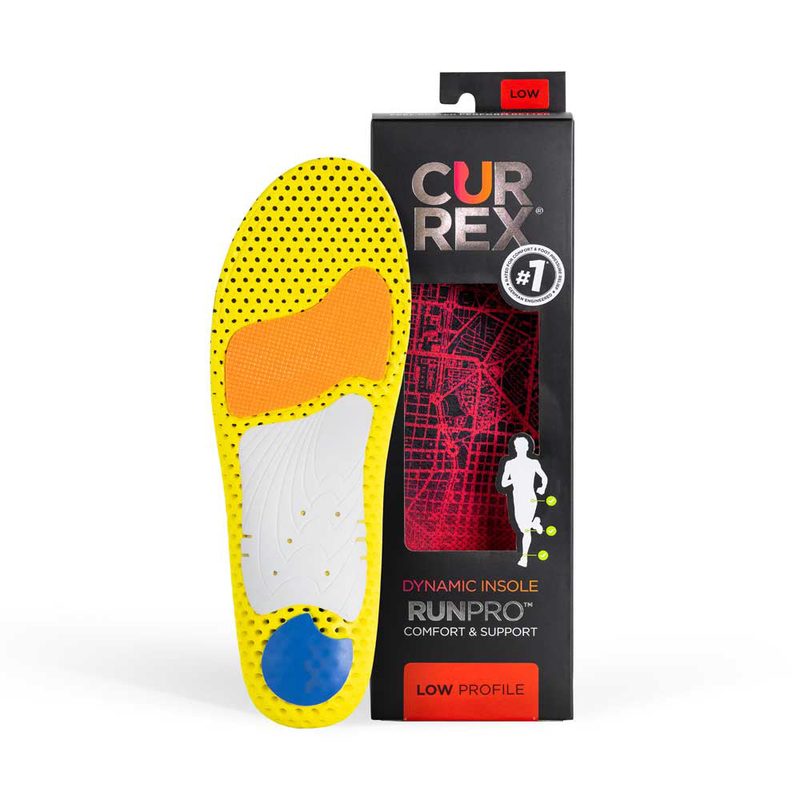
CURREX RunPro (Low profile)
Running shoes rarely have room for a thick orthotic. The RunPro is thin and flexible, comes in Low, Medium and High profiles, and CURREX’s own fitting guide maps flat feet and low arches to the Low profile.
Why it stands out
- Flexible “dynamic” shell that moves with the foot instead of locking it.
- Zero heel drop and a decoupled heel, so it does not change how your shoe feels much.
- Sized XS–2XL and trimmable; fits widths up to 2E.
ArchLow profile (choose Low for flat feet)
SupportFlexible dynamic shell
LengthFull length, sized and trimmable
CushioningDual-layer, zero drop
FitsRunning, walking and training shoes
Good fit if
- You run or train and want arch support that fits inside a running shoe.
- A firm full orthotic has felt too stiff on the run.
Skip it if
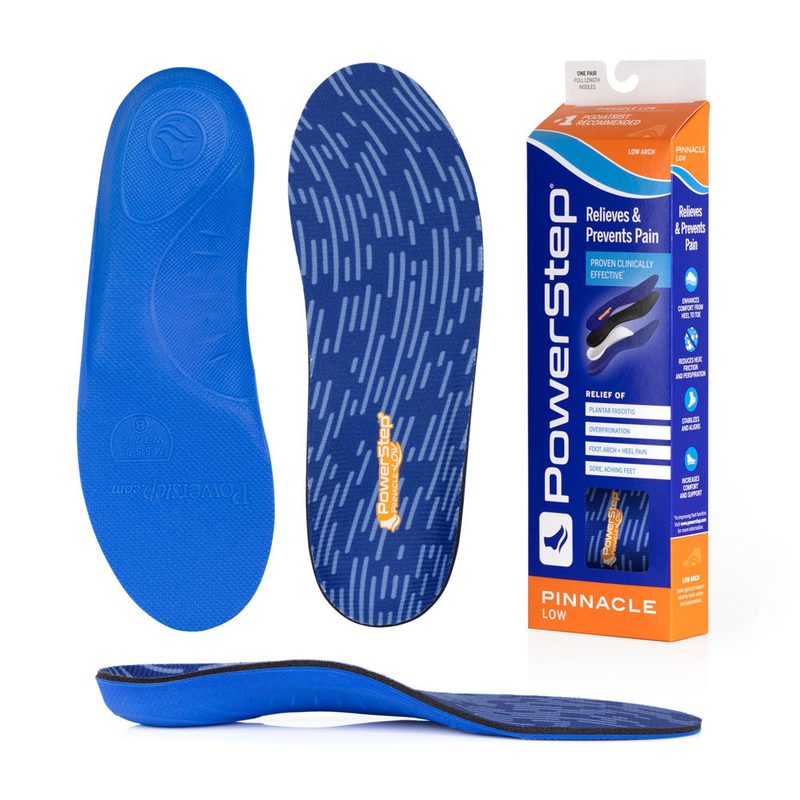
- Your arch collapses a long way — a flexible insole can flatten under you; consider the Pinnacle Maxx.
- You need an insole for standing at work all day.