
Best for standing all day#1
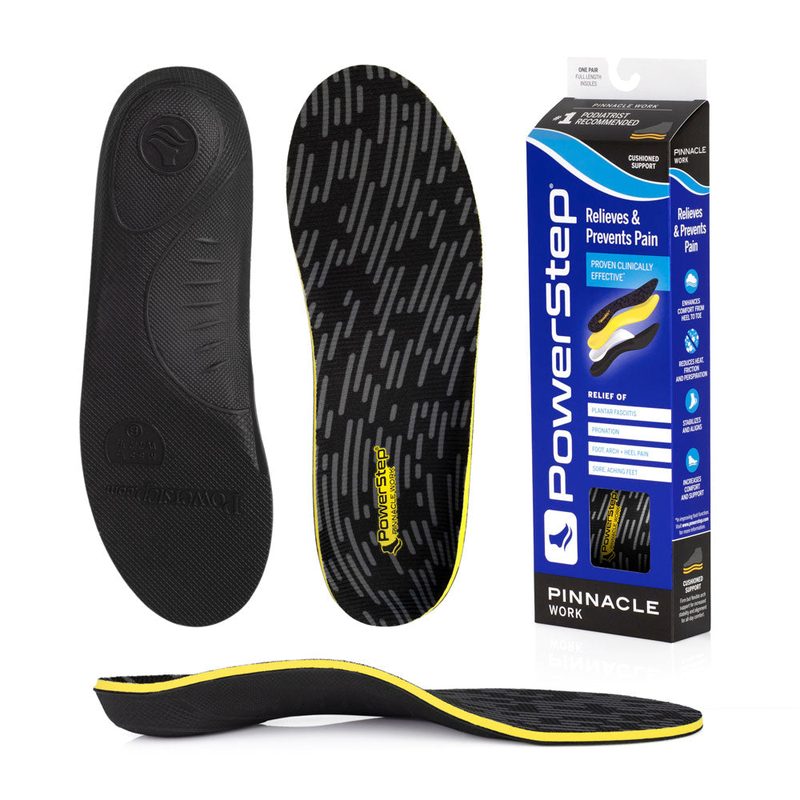
PowerStep Pinnacle Work
For long shifts on concrete, the Pinnacle Work puts PowerStep’s semi-rigid shell under a thicker shock-absorbing foam layer. PowerStep sells it for work shoes, work boots and standing all day.
Why it stands out
- Same firm-but-flexible shell and deep heel cradle as the Pinnacle.
- Thicker “ShockAbsorb” foam on top for hard floors.
- Pre-sized, widths up to 2E, black top fabric that hides wear.
ArchModerate (neutral)
SupportSemi-rigid polypropylene shell
LengthFull length, pre-sized
CushioningThicker shock-absorbing foam
FitsWork shoes and boots with removable insoles
Good fit if
- You stand or walk on hard floors for most of the day.
- Your work shoes or boots have a removable insole and some room.
Skip it if
- Your boots are already snug — this is a thicker, dual-layer insole.
- You specifically want a low-arch shape — this uses PowerStep’s neutral arch.